


Why Independent Agencies Are Building 3D Capabilities Instead of Buying Them
Holding companies acquire studios. Independents hire designers. The $10 million acquisition versus the $650,000 build-out reveals why speed beats scale in the capability arms race.
The search volume tells one story: zero monthly searches for "3D design agency" or any variation of immersive design capability. The RFP reality tells another. In the past 18 months, pitch briefs from automotive brands, streaming platforms, and consumer tech companies have quietly added a new requirement that used to be optional. Not "a website with motion graphics." Not "social content with some animation." The new line reads: "Demonstrate 3D and immersive design capabilities across web, spatial, and experiential touchpoints."
The holding companies saw this coming and did what holding companies do. They acquired specialists. WPP bought Design Bridge and Partners. Publicis absorbed Razorfish's immersive team. Omnicom folded spatial designers into TBWA's structures. The standard playbook: when a capability becomes essential, buy the people who already have it.
The independents can't play that game. A 47-person shop in Brooklyn doesn't break off $12 million to acquire a volumetric design studio. But the RFPs keep arriving with the same requirement. The agencies without acquisition budgets started winning the pitches.
The Build Decision: Why Hiring Beats Acquiring
The economics look impossible until you map them out. Acquiring a 12-person 3D studio means buying their existing client contracts, their office lease, their benefits structure, their culture debt. The median acquisition price for a specialized design capability runs 2.5x to 3x annual revenue. A studio billing $4 million costs $10 million to acquire, plus 18 months of integration chaos.
Hiring three senior 3D designers costs $450,000 in first-year salary. Add benefits, software licenses, render farm access, and onboarding: call it $650,000 total. The capability gap closes in 6 months instead of 18. The cultural integration is zero. The designers report to the ECD who's been there for 8 years instead of a department head who came with the acquisition.
The math gets sharper when you account for utilization. An acquired studio brings its own client roster, which sounds good until you realize those clients don't want the work the parent agency wants to make. The studio's bread-and-butter product visualization gigs keep three designers busy full-time on commodity work that doesn't win awards or attract new business. The parent agency wanted the capability for automotive pitch work and spatial brand experiences. The economic model collides with the operational reality.
Independent agencies hiring individual contributors avoid this entirely. The new designers work on the projects the agency chooses. Their time gets allocated to pitch work, to high-profile clients, to the cases that become Cannes entries. No legacy client obligations. No "we have to keep billing this CPG brand because the studio's P&L depends on it" constraints.
The talent market makes this possible. Senior 3D designers at holding company studios see the same integration disasters their indie peers see. They watch acquired shops lose their creative autonomy within 24 months. They see the original founders leave after their earnouts vest. The message spreads: getting acquired means 3 years of golden handcuffs followed by either firing or voluntary departure. The best 3D talent now prefers joining an independent directly rather than joining a specialist that will get absorbed.
The Client Requirement Shift: From Portfolio Piece to Table Stakes
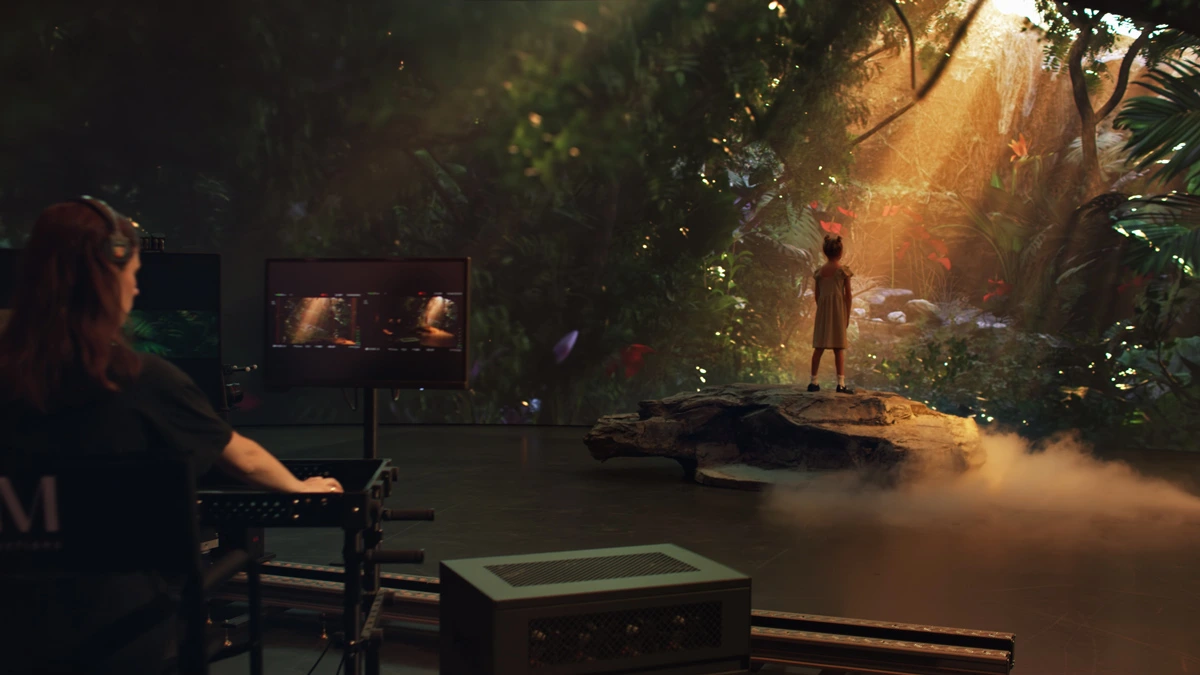
The Cannes Lions 2024 Film Grand Prix went to a 90-second automotive spot that was 73% 3D rendered environments. Not product shots. Not hero car glamor passes. Entire cityscapes, interior spaces, lighting scenarios built volumetrically and composited with live-action plates so seamlessly that the jury didn't notice until the case study revealed the breakdown.
The holding company that produced it: none. The indie that won: also none. The work came from an automaker's in-house studio partnering with a specialized 3D house. But every CMO in the automotive category saw the same thing. The work that's winning isn't just using 3D for product visualization anymore. It's building entire narrative worlds that would be impossible to shoot practically.
The RFP language shifted within a quarter. Automotive briefs started requiring "demonstrated 3D environmental design and real-time rendering capabilities." Not as a bonus skill. As a base requirement to pitch. The change cascaded into consumer tech, then streaming entertainment, then luxury goods. Brands selling physical products in premium categories decided that flat photography no longer matched their price points.
The holding companies had the capability but not the agility. Their 3D teams sat in specialized departments that billed by the hour with 6-week lead times. An indie pitch team that needed a 3D concept exploration for a deck due in 10 days couldn't access that resource without going through procurement, scoping, and approval workflows that took longer than the pitch timeline itself.
Independent agencies structured differently. Their 3D designers sat in the same room as the strategists and copywriters. A creative director could walk over at 4 PM and say "we need to show this product in a zero-gravity environment for tomorrow's deck" and get it by 9 AM. Not perfect final pixels. But enough to show the thinking, to prove the capability, to demonstrate the agency understood how to use the tool strategically instead of decoratively.
The pitch win rate told the story. Agencies with in-house 3D capabilities started converting 34% of automotive and tech RFPs compared to 18% for agencies without that capability. The gap wasn't talent or strategy. It was speed to concept visualization. The ability to show the idea instead of describe it.
The Talent Acquisition Challenge: Competing for Skills the Holdcos Want
The holding companies realized their mistake by mid-2023. They'd been acquiring studios when they should have been acquiring individual contributors. WPP announced a "3D Design Excellence" initiative that translated to poaching senior designers from independents with $40,000 salary bumps and equity grants.
The indie response wasn't counter-offers. It was operational design. Holding company 3D roles meant sitting in Manhattan headquarters working on banner ads for a pharmaceutical client while the studio's automotive work went to the legacy team that had been there for 12 years. Independent roles meant working from anywhere on the highest-profile projects the agency could pitch.
The compensation gap closed when you accounted for total package. Holding company designers got higher salaries but capped bonuses tied to department performance metrics they couldn't influence. Independent designers got lower base salaries but uncapped profit-sharing tied to agency performance they directly affected. A senior designer who helped win a $3 million automotive account saw 4% of that fee in year-one bonus. The holding company designer who contributed to the same pitch got a $15,000 annual bonus regardless of outcome.
Location flexibility became the decisive factor. Holding companies mandated 3-day office weeks in major metro offices. Independents structured around project-based collaboration with quarterly in-person intensives. A 3D designer in Austin could work for a New York indie without relocating. That same designer couldn't access the equivalent holding company role without moving to Manhattan, Chicago, or LA.
The skill profile shifted the talent pool further in favor of independents. The best 3D designers now come from gaming, film VFX, and architectural visualization. Those industries trained people to work in distributed teams on complex projects with tight deadlines. Holding company creative departments trained people to work in offices on campaigns with 8-week timelines. The former group preferred the indie operational model. The latter group needed the structure of departmental hierarchies.
The Partnership Economics: Build Internal vs. Partner External
Some independents made a different calculation. Instead of hiring 3D designers, they formalized partnerships with specialized studios and built the relationship into their pitch and production processes. The economics worked when the partnership was structured correctly.
The wrong model: find a 3D vendor for each project, negotiate rates per job, manage the relationship transactionally. This saved headcount costs but created pitch problems. An agency pitching an automotive account couldn't show 3D concepts because they didn't have a 3D partner under contract yet. By the time they scoped and budgeted the 3D work, the pitch deadline had passed.
The right model: establish an exclusive or preferred partnership with one 3D studio, negotiate annual rates and priority access, integrate their team into pitch processes as if they were employees. The agency paid a monthly retainer for guaranteed availability and discounted project rates. The 3D studio got predictable revenue and priority project access.
The retainer model cost $25,000 to $40,000 monthly depending on the studio's seniority and the agency's expected volume. Annual cost: $300,000 to $480,000. That bought 3-5 days of guaranteed weekly availability plus discounted rates on production work. Compare that to hiring three full-time senior designers at $650,000 annual fully-loaded cost.
The partnership model worked better for agencies under 50 people. Their project volume didn't justify three full-time 3D designers. Their pitch volume did justify having 3D capability available on 72-hour notice. The retainer partnership gave them the capability without the fixed overhead.
The breakpoint hit around 60-75 people. At that scale, agencies had enough pitch volume and production work to keep 2-3 designers busy full-time. The partnership retainer cost approached the cost of hiring, but the partnership model capped capability at what the external studio could deliver within the retainer hours. Agencies hitting pitch volume that exceeded retainer capacity had two choices: negotiate a higher retainer or bring the capability in-house.
Most chose in-house at that threshold. The talent acquisition risk dropped when the agency could offer designers consistent project flow instead of sporadic work. A 70-person independent pitching 15-20 RFPs annually and running 8-10 production projects could show a senior designer a 52-week workload of high-quality projects. That pitch worked even against holding company salary premiums.
The Forward Projection: What Happens When Spatial Computing Normalizes
Apple Vision Pro shipped in February 2024. Meta Quest 3 hit the market in October 2023. The install base for spatial computing devices crossed 12 million units globally by December 2024. Still tiny. Still early adopter territory. But every premium brand CMO saw the same horizon line.
The RFP requirement is changing again. It's no longer "demonstrate 3D design capabilities." It's "demonstrate spatial design capabilities for mixed reality environments." The capability gap just widened. 3D environmental design for screens translates to spatial design for headsets, but not automatically. The tool knowledge overlaps. The design thinking diverges.
Independent agencies have 18 months before spatial design becomes table stakes the way 3D design is now. The agencies moving fastest are the ones who already built 3D capability in the last cycle. They understand the build-vs-partner decision tree. They've already hired designers who know Unity and Unreal Engine. The gap between 3D for screens and 3D for spatial computing is smaller than the gap between 2D motion design and 3D environmental design was 3 years ago.
The talent will follow the same pattern. Spatial designers currently work in gaming studios, in VFX houses, in architectural visualization firms. They're not in advertising agencies yet because the client demand isn't there yet. But the RFPs are coming. The agencies that hire spatial designers in Q1 2025 will have 12-month head starts on pitch capability when luxury automotive brands start requiring spatial showroom experiences in their briefs.
The partnership model gets harder with spatial design. The specialist studios don't exist yet in advertising-adjacent territory. A 40-person independent can't call a spatial design studio and negotiate a retainer partnership because there are maybe 6 studios globally that do spatial brand work at scale. They're all booked with platform clients like Meta and Apple. The window for partnership is closed. The only path is hiring.
The holding companies will try to win with acquisition again. They'll identify the 2-3 spatial design studios that emerge in 2025-2026 and offer 4x revenue acquisitions. Some will sell. But the best spatial designers will see what happened to the best 3D designers in the last cycle. They'll see the integration disasters, the creative compromise, the founders leaving after earnouts. And they'll take the indie offer instead.
Independence remains the advantage. Not because independents have more resources. Because they have faster decision cycles, clearer creative autonomy, and operational models that let specialized talent do their best work instead of their most billable work. The next capability shift is coming. The agencies that built the last one are ready.
Free Agency Media Editorial
All newsYou might like
Gaming Agencies Thrive in a Category That Doesn't Exist on Google
Why AI and Web3 Companies Choose Independent Agencies Over Holding Companies
Why AI and Web3 Companies Choose Independent Agencies Over Holding Companies

The Zero-Search Advantage: Why Independents Win Before the Market Knows to Look
The Case Study Arms Race: Why Independents Win Through Radical Transparency