The Restaurant Branding Boom Nobody's Tracking
Zero search volume. Six-figure rebrands. Independents are quietly dominating restaurant and hospitality branding while holding companies miss the entire category.
Nobody's searching for restaurant branding agencies. The keyword data shows zero monthly volume across the entire cluster: restaurant brand identity, hospitality creative agencies, food service branding. Zero. And yet independents are quietly building entire practices around this work, landing six-figure rebrands from Chipotle to boutique hotel chains to fast-casual startups raising Series B funding. The disconnect isn't an anomaly. It's the signal.
Restaurant and hospitality brands don't Google "restaurant branding agencies." They ask their CMO friends who rebranded the Seattle seafood chain that now has a waitlist every night. They DM the founder whose rebrand got written up in Eater. They notice which shops keep showing up in the industry award shows that actually matter: James Beard, Restaurant & Bar Design Awards, the work that makes operators jealous enough to steal the agency's name off the credits.
The holding companies missed this entirely. WPP's restaurant vertical talks about "omnichannel customer journey optimization." The independents who are winning this work talk about menu design that photographs well on Instagram, interior concepts that give diners something to post, brand systems flexible enough to work on a food truck or a flagship. One conversation is about stakeholder alignment. The other is about why people wait 90 minutes for a table.
The Operational Reality That Created the Gap
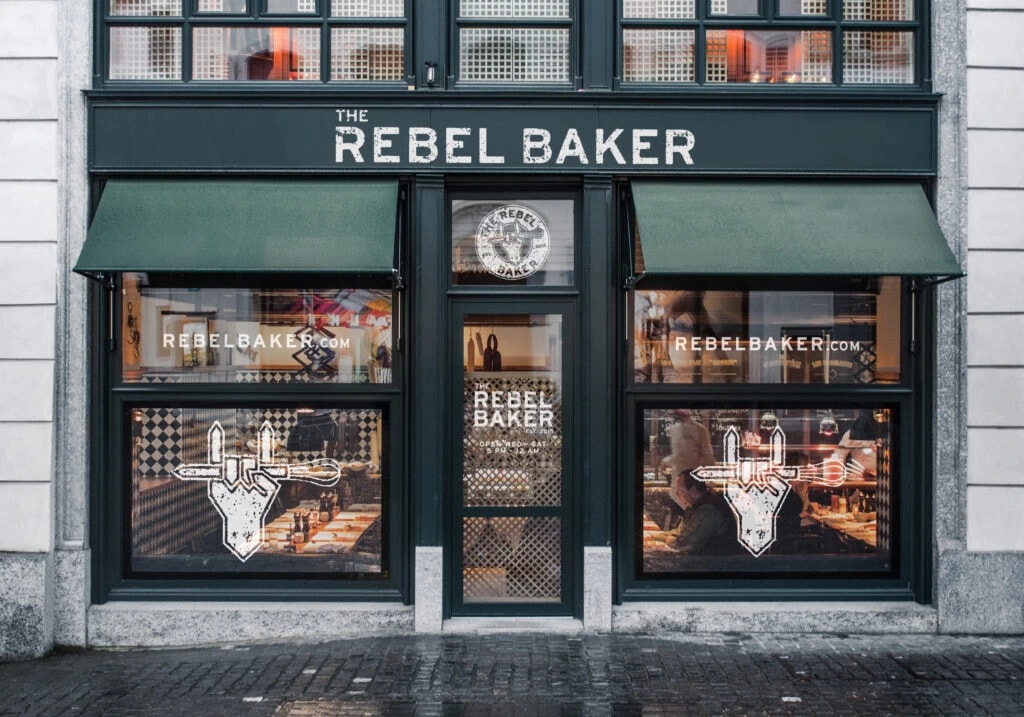
Restaurant branding used to mean logo, menu, maybe some signage if the budget stretched. The modern version is a cross-disciplinary build: visual identity, spatial design, packaging systems, digital ordering interfaces, social strategy, merchandise programs. A rebrand touches every customer interaction from the reservation confirmation to the doggie bag.
Holding companies built themselves for the old version. Creative on one floor, digital three floors up, experiential in a different office entirely. A restaurant rebrand becomes a coordination problem: nine teams, four offices, 47 people on the status call. The independent shop puts the brand designer, the interior designer, and the packaging lead in the same room. Iteration cycles collapse from weeks to days.
Speed matters more in restaurant branding than almost any other category. A fast-casual chain opening 12 locations this year can't wait four months for the holdco to align stakeholders across regions. They need the menu boards designed, tested in one location, refined, and rolled out in six weeks. The 18-person independent delivers in five.
The economics work differently too. A $200K restaurant rebrand is a rounding error for the holding company: not worth the senior team's time, gets staffed to juniors, produces mediocre work that nobody puts in the case study section. For the independent, $200K is a flagship project. Founders in the room, best people on it, work that goes straight into the awards submissions.
This isn't about price competition. It's about what $200K buys. At the holdco, it buys a team working on six other projects, reporting to someone who reports to someone who's actually accountable for the work. At the independent, it buys the founder's cell number and creative directors who've been thinking about this rebrand in the shower for three weeks.
The Cultural Fluency Holding Companies Can't Manufacture
Restaurant operators speak a different language than CPG brand managers. They care about table turns and labor costs and what the kitchen can actually execute at volume. They understand that a beautiful brand system means nothing if the line cooks can't plate it consistently during Saturday dinner rush.
The independents winning this work have that fluency built in. Not because they studied hospitality marketing but because their founders eat at these places, follow the chefs on Instagram, understand why a natural wine bar's brand needs to feel completely different than a cocktail bar three blocks away even though they're serving the same demographic.
Holding companies approach restaurant branding like any other vertical: research phase, strategy deck, creative concepts, refinement rounds. The independents who've built restaurant practices skip the performance. They ask about the food, the chef's background, what the operator actually wants people to feel when they walk in. The strategy comes from understanding the product, not from a positioning workshop.
This shows up in the work. Holding company restaurant branding looks like restaurant branding: safe serif typefaces, earth tones, the word "craft" somewhere in the manifesto. Independent work looks like the restaurant's actual personality. Weird when the concept is weird, elegant when the food justifies elegance, playful when the whole point is not taking fine dining so seriously.
Restaurant branding that works feels inevitable. Like the brand always existed and the designers just uncovered it. That only happens when the team understands what makes this restaurant different from the 47 other new openings this month. Cultural fluency isn't a research deliverable. It's what you get when the creative team has strong opinions about restaurant design and cares whether this rebrand succeeds.
The Founder-Direct Model as Competitive Advantage
Restaurant and hospitality brands are overwhelmingly founder-led. The person signing the rebrand contract is the person who took out the second mortgage to open the first location. They don't want to brief a junior account person who briefs a mid-level strategist who briefs a senior creative who assigns it to a team that's never met them.
They want to sit across from the agency founder and talk about what they're building. They want creative directors who'll argue with them about the logo because they care whether it works. They want to text the designer directly when they think of something at 11pm. The independent agency model is built for this. The holding company model actively prevents it.
Every layer of hierarchy is a translation problem. The restaurant founder's vision gets filtered through account management, strategy, creative leadership, down to the team doing the work. By the time it reaches the designer, it's been translated four times. Nuance gets lost. The specific thing that makes this restaurant interesting becomes "elevated casual dining experience."
The founder-direct model collapses all that distance. The restaurant operator talks to the agency founder. The agency founder talks to the creative team. The creative team asks questions directly. The work that comes back reflects what was said, not what survived the game of telephone.
This matters more in restaurant branding than in most categories because the brand needs to reflect the founder's personality. A restaurant is an extended expression of someone's taste, their background, what they think is missing from the neighborhood. That doesn't translate through seven layers of agency hierarchy. It only works when the people building the brand have direct access to the person whose vision they're translating.
The Portfolio Compound Effect
Restaurants talk to other restaurants. Hotel operators follow each other's rebrands. A successful rebrand for one fast-casual chain gets noticed by five other concepts in the same category. The independent agency that does strong work for one hospitality brand gets inbound from three more within six months.
This creates a compound effect that's nearly impossible to replicate through traditional new business development. Every successful restaurant rebrand is a proof point that leads to referral conversations with other operators who saw the work and want the same team. The portfolio becomes the business development engine.
Holding companies can't capture this dynamic. The team that did the restaurant rebrand gets reassigned to a CPG pitch the next quarter. The relationship lives with the agency, not with the specific people who did the work. When the next hospitality brand comes asking, the holdco can sell the case study but can't deliver the same team.
Independents build entire practices this way. Start with one strong restaurant rebrand. The chef tells another chef. That rebrand wins a Restaurant & Bar Design Award. Three hotel groups reach out. One of those becomes a flagship project. That work gets covered in Dezeen. A fast-casual chain raising Series B sees it and wants that team for their national rollout.
The math compounds faster than traditional client acquisition because the work does the selling. Restaurant operators don't need to see the agency's full client list. They need to see one restaurant rebrand that made them jealous. One project they wish their brand looked like. The independent with a tight hospitality portfolio has that proof on repeat.
The Pricing Architecture That Makes It Sustainable
Restaurant rebrands sit in a strange economic zone. Too complex for the $50K logo refresh shops. Not big enough for the holding companies to staff properly. The independents who've built sustainable restaurant practices figured out the pricing architecture that makes $150K to $400K projects work at high quality without burning out the team.
The key is scope definition that matches restaurant operational reality. A full rebrand includes brand strategy, visual identity system, menu design templates, signage standards, packaging if relevant, digital applications, and usually some level of interior design collaboration. That's a six-month engagement with clear phases and specific deliverables.
The independent agency prices it as a complete build, not hourly rates that incentivize scope creep. Fixed fee for defined deliverables. The restaurant operator knows exactly what they're getting and what it costs. The agency can staff efficiently because the scope doesn't expand every week when the client thinks of something new.
This pricing model works because it aligns with how restaurant brands develop. They're not testing positioning statements for 18 months. They need the full brand system built so they can open the second location or start the fundraising process or launch the rebrand before the busy season. Clear timeline, clear deliverables, clear price.
The economics work for the agency because restaurant projects tend to be less stakeholder-intensive than enterprise clients. Fewer rounds of revisions. Faster decisions. The operator either likes it or doesn't. No fifteen-person approval chain. An independent can deliver a $300K restaurant rebrand with higher margins than a $500K CPG project that involves nine months of research and alignment.
The real financial model isn't one-off projects. It's building relationships with growing restaurant groups and hotel operators who come back for each new concept. The first rebrand is the proof point. The second project is the expansion to a new location. The third is a completely new concept from the same hospitality group. Revenue compounds through depth of relationship, not constant new business churn.
What This Pattern Reveals About Independent Agency Positioning
The restaurant and hospitality boom isn't really about restaurants. It's about independents figuring out where their operational model creates genuine competitive advantage, not just price competition. The pattern shows up in other categories too: DTC brands, cannabis companies, B2B tech startups. Categories where the client wants founder-direct creative, needs fast iteration, and values cultural fluency over global network credentials.
The agencies building sustainable restaurant practices didn't wake up and decide to specialize in hospitality. They did one strong project, got referrals, did another, realized the pattern, and leaned into it. The specialization emerged from strength, not strategy consulting.
This is the blueprint for independent positioning in 2025: find the categories where your natural advantages matter more than the holding company's scale. Where faster decisions beat bigger teams. Where cultural fluency beats research budgets. Where founder-direct access is worth more than office locations in 47 countries.
The zero search volume for "restaurant branding agencies" isn't a problem. It's confirmation. The work that matters doesn't come from SEO. It comes from restaurant operators asking each other who did that rebrand that made the brand feel completely different overnight. The independents winning this work aren't competing for search rankings. They're competing for the referral conversation.
That's the real competitive moat: being the name that comes up when one restaurant founder asks another who to call. The holding companies are still trying to rank for keywords. The independents are building portfolios strong enough that the work sells itself.
The restaurant and hospitality category won't stay quiet forever. Eventually the search volume will spike. Eventually the holding companies will notice and build verticals and hire "hospitality specialists" and create thought leadership about restaurant brand trends. By then the independents who built real practices will have two-year waitlists and client relationships the holdcos can't replicate through case studies and credentials decks.
The boom is already happening. It's just not happening where anyone's looking. The agencies smart enough to see it aren't the ones Googling "how to win restaurant clients." They're the ones restaurants are Googling to find out who did that rebrand everyone's talking about.
Free Agency Media Editorial
All newsYou might like
Gaming Agencies Thrive in a Category That Doesn't Exist on Google
Why AI and Web3 Companies Choose Independent Agencies Over Holding Companies
Why AI and Web3 Companies Choose Independent Agencies Over Holding Companies

The Zero-Search Advantage: Why Independents Win Before the Market Knows to Look
The Case Study Arms Race: Why Independents Win Through Radical Transparency