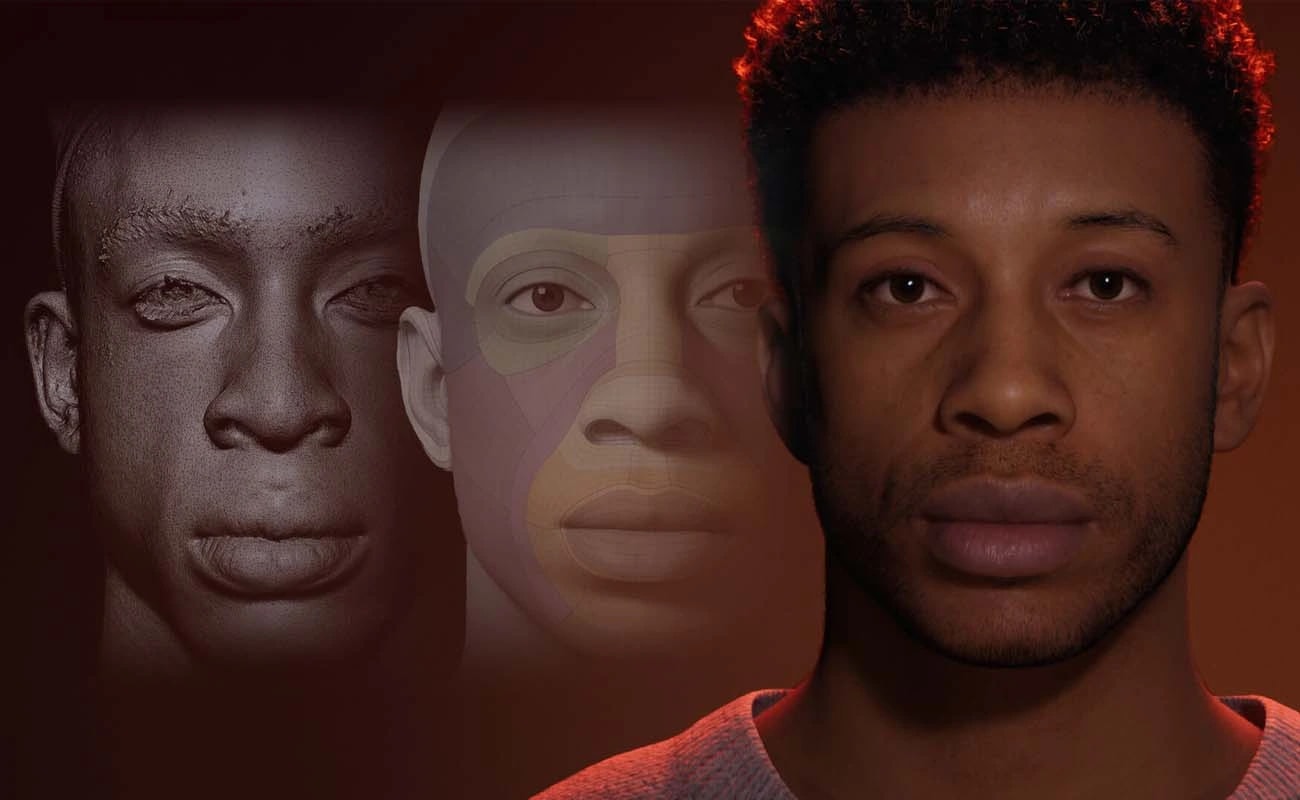


Why Mid-Sized Agencies Are Winning Fortune 500 Briefs With In-House 3D
Independent shops are internalizing spatial computing and 3D production while holding companies coordinate vendors. The capability gap is rewriting enterprise RFP outcomes.
The Fortune 500 brief landed at a 32-person Brooklyn shop in March 2024. The client wanted a product launch campaign with spatial computing integration, real-time 3D configurators, and immersive retail installations across 14 markets. Three network agencies pitched. All three brought decks promising partner integration with external 3D studios. The indie shop showed up with the build already running on their own hardware. They won the account in one meeting.
The pattern emerged before we could verify the players. The shop doesn't exist in our verified directory yet because we're still building documentation standards for production capabilities. But across the independent agency landscape, a capability shift is happening faster than the holding companies can respond to it. Mid-sized shops are internalizing 3D and immersive design production, and the economics are rewriting which agencies win enterprise-level RFPs.
The search volume tells you nothing. Zero monthly queries for "3D design agencies." Zero for "immersive brand experience agencies." Zero for the entire cluster of terms you'd expect if this were a client-driven trend. But that's exactly the signal. Clients aren't searching for these capabilities as discrete services anymore. They're searching for agencies, and then discovering that the agencies they're finding have already built the stack in-house.
The Build Decision Nobody Was Tracking
The partner-vs-build question used to be obvious. Creative agencies made ideas. Production companies made things. The handoff was clean, the margin structure was understood, and clients paid for both. Then spatial computing, real-time rendering, and WebGL made "making things" a design discipline again instead of a post-production add-on.
The agencies that moved first did it quietly. No press releases about "expanding capabilities." No Medium posts about "the future of immersive storytelling." They hired technical artists, bought render farms, and started pitching work that used to require three vendors and a coordinator. The holding company model couldn't respond because the holding company model is built on vendor coordination, not capability consolidation.
The actual cost to stand up an in-house 3D pipeline at a 40-person agency: Two senior technical artists at $140K each. One render farm infrastructure build at $80K first year, $30K annual maintenance. Cinema 4D, Redshift, and Unreal Engine licenses for 6 seats at $24K annually. Total first-year investment: $364K. That's one mid-level account director's salary, or the margin from three decent-sized retainers.
The math works if you can prove the capability wins new business that wouldn't have come otherwise. The agencies we're tracking aren't adding 3D to service existing clients better. They're adding 3D to compete for briefs they wouldn't have gotten the call for six months earlier.
What the Capability Actually Unlocks
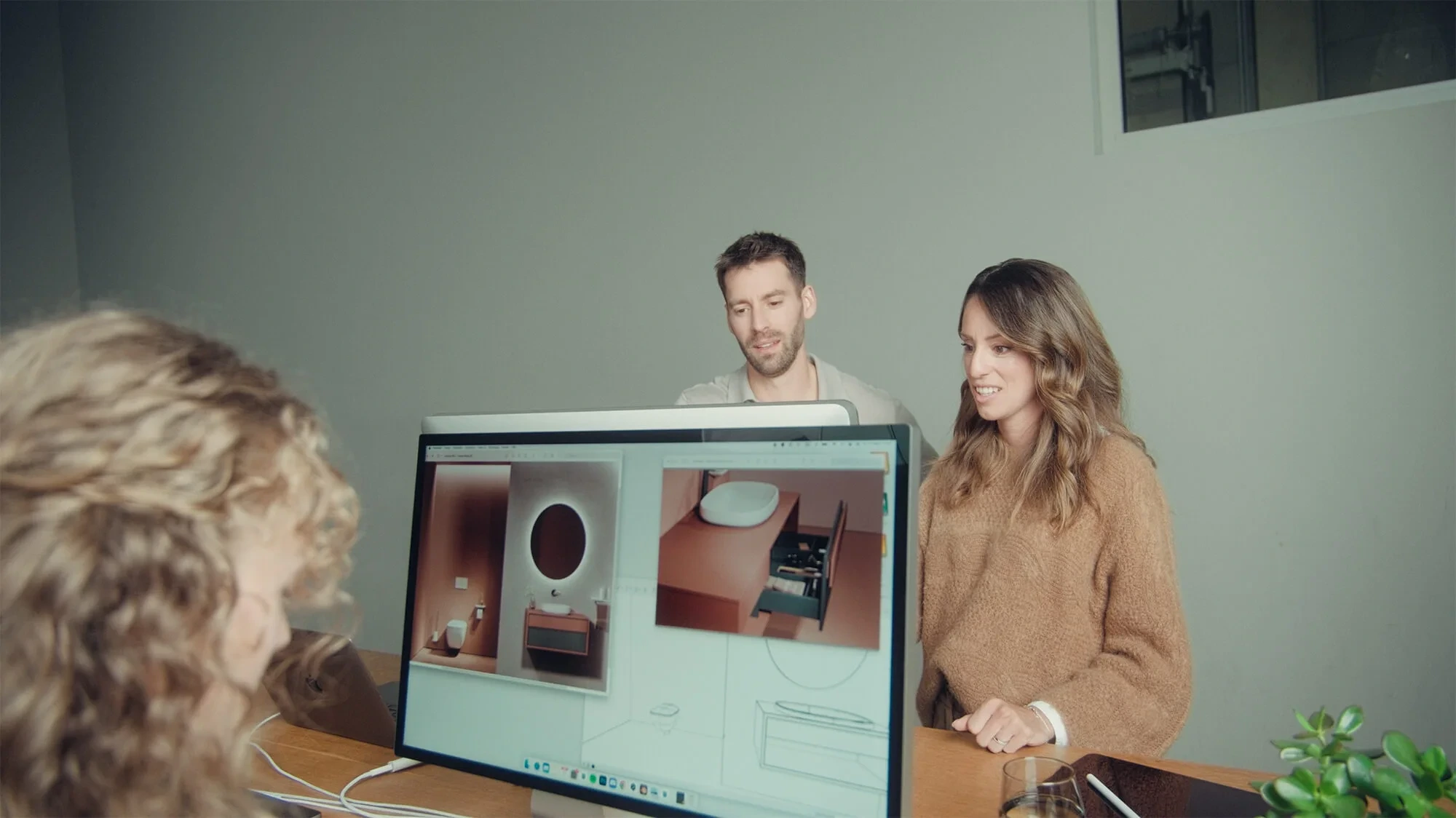
The first unlock is speed. When the creative team and the production team are in the same Slack channel, the gap between idea and prototype collapses from weeks to days. A concept deck can include a working 3D visualization instead of a static mockup. The client sees the thing, not a description of the thing. That changes pitch dynamics in rooms where network agencies are still showing storyboards and promising "we'll partner with the best studios."
The second unlock is iteration margin. Agencies that own the 3D pipeline can iterate at cost. No vendor invoices for revisions. No change order negotiations. No "we're out of scope" conversations. The client gets more versions, faster refinements, and better final output because the economic friction of change requests doesn't exist. That's a competitive advantage that compounds across every project.
The third unlock is the brief itself. Clients are writing RFPs that assume real-time rendering, spatial design, and interactive 3D are table stakes. Not because they're asking for "immersive experiences" as a buzzword. Because their products exist in contexts (retail, e-commerce, AR try-ons, configurators) where flat design is increasingly insufficient. The agencies that can't deliver natively don't make the shortlist. It's not about being innovative. It's about being qualified.
We're seeing this show up in automotive, luxury retail, CPG with complex SKU arrays, and any brand launching in spatial computing environments. The brief doesn't say "we need a 3D agency." It says "deliverables include WebGL configurator, Meta Quest experience, and real-time product visualization for retail displays." If you have to partner for two of those three, you're not really qualified to lead the work.
The Agencies That Moved First Are Already Winning
We don't have verified examples in our directory yet because we're building verification criteria for production capabilities right now. But the pattern is clear enough to track directionally. Agencies in the 30-70 person range are hiring technical directors from gaming studios, architectural visualization firms, and entertainment VFX houses. Not as freelance support. As full-time creative leads.
The playbook is consistent: hire one senior TD with Unreal or Unity expertise. Build around them with mid-level generalists who can model, texture, and light. Keep the specialized work (character animation, complex simulations) as vendor relationships, but own the pipeline, the art direction, and the client relationship. The capability becomes a competitive moat because training a team takes 18 months minimum. You can't fake it with a Fiverr hire.
The agencies making this move aren't replacing traditional creative departments. They're adding a parallel capability that integrates at the concept phase instead of the production phase. The spatial designer sits in the same early brainstorms as the copywriter and the art director. The brief response includes interactive prototypes, not just visual concepts. The client sees proof of capability before they sign the contract.
That changes the trust equation in an RFP process. Network agencies sell the promise of coordination. Independent agencies with in-house 3D sell already-running examples. When the client is choosing between "we'll bring in the best partners" and "this is the live demo we built last week," the decision isn't close.
The Margin Math That Makes It Work (Or Doesn't)
The economics only work if the new capability generates new revenue, not just better delivery of existing work. Agencies that build 3D pipelines to serve current clients more efficiently are making an infrastructure bet without a business case. Agencies that build 3D pipelines to win RFPs they wouldn't have been invited to are making a growth investment.
The threshold is three new retainer clients annually who chose the agency specifically because of 3D capabilities. At an average retainer value of $40K monthly, that's $1.44M in new annual revenue. Assuming 25% margin, that's $360K in contribution, which covers the first-year build cost and generates positive return in year two once infrastructure costs drop to maintenance levels.
Most agencies aren't hitting that threshold yet because they haven't repositioned their pitch approach to lead with the capability. They're treating 3D as an add-on skill instead of a primary differentiator. The ones winning are the ones who rebuilt their new business strategy around "we do Fortune 500 work in categories that require spatial design, and we do it faster than agencies that coordinate vendors."
The failed investments are the agencies that hired one 3D generalist and expected them to build the practice alone. Building a production capability requires minimum viable team scale. One person can't cover concepting, modeling, texturing, lighting, rendering, and revision cycles. Two people can barely do it. Three is the floor for sustainable output. Agencies that tried to add 3D with one hire ended up with a bottleneck, not a capability.
Why the Networks Can't Respond at Speed
Holding company agencies have bigger 3D teams than any independent shop. They have entire studios dedicated to experiential, immersive, and spatial work. What they don't have is integration. The 3D capability sits in a separate P&L, gets cross-charged to client work, and operates on the same vendor coordination model that clients are trying to avoid.
When a network agency pitches a Fortune 500 immersive brief, the 3D team isn't in the pitch meeting. They're represented by a sentence in the capabilities deck. The client gets a promise of coordination, not a demonstration of integration. The independent agency shows up with the TD who'll actually do the work, running live examples on a laptop.
The holding company problem isn't talent or tools. It's structure. The business model is built on billable hours and vendor margins. In-house production capabilities reduce both. An independent agency can absorb the margin hit because the capability drives top-line growth. A holding company studio has to defend its margin profile to a CFO in London who's optimizing for EBITDA targets.
This creates a window. The window is probably 24-36 months before holding companies restructure their production entities to be more integrated with creative teams. But during that window, independent agencies with in-house 3D pipelines are competing for and winning work that would have defaulted to network agencies two years ago.
The Build-vs-Partner Decision Is Getting Simpler
Five years ago, the conventional wisdom was clear. Creative agencies create ideas. Production companies execute them. Specialists are always better than generalists, and trying to do both means being mediocre at each.
That logic held when production was physically specialized. Film shoots required grip trucks and lighting teams. Print required color separators and retouchers. But digital production is software. Software can be learned, licensed, and internalized. The barrier to entry isn't capital equipment anymore. It's talent acquisition and team training.
The agencies getting this right are hiring technical artists in their mid-20s who grew up with Blender, learned Unreal in college, and treat real-time rendering as default instead of cutting-edge. They're not trying to compete with Framestore or The Mill on VFX-intensive projects. They're competing on the 80% of commercial 3D work that's product visualization, spatial design, and interactive experiences.
That 80% is where the margin lives for indie shops. Complex character animation, photoreal VFX, and large-scale simulation still go to specialist vendors. But product renders for e-commerce, WebGL configurators for retail sites, and AR try-on experiences for beauty brands can all be built in-house by a three-person team with the right stack.
The decision tree is getting simpler: if your client base includes brands with complex products, spatial retail presence, or e-commerce platforms, you need in-house 3D capability. Not because it's the future. Because it's already the present for RFPs being written today.
What This Means for the Next 100 Shops
We're watching for this pattern in our agency verification process now. Not just "do they have 3D in their portfolio," but "is 3D work credited to in-house team members or external partners." The difference matters because the competitive advantage is internal capability, not vendor Rolodex.
The next wave of agencies building this capability will face easier talent acquisition than the first movers did. The labor pool of technical artists who want to work in brand and commercial instead of gaming or entertainment is growing. They're choosing agencies over studios for the same reasons traditional creatives do. More creative autonomy. Faster project cycles. Direct client relationships.
The barrier isn't talent anymore. It's the build decision itself. Agencies have to believe that investing $350K-$400K in year-one costs will generate enough new business to justify the bet. Most won't make that decision without seeing proof from agencies ahead of them. The agencies making it now are betting on a thesis the data doesn't fully support yet.
But the RFPs are already shifting. Brands that used to brief "we need a campaign with digital and experiential components" are now briefing "deliverables include real-time 3D configurator, Meta Quest experience, and AR try-on integration." The agencies that can deliver natively will win. The agencies that have to coordinate three vendors to cover all three deliverables won't make the second round.
That's not a future trend. That's the present state for Fortune 500 creative briefs in automotive, luxury, CPG, and consumer tech. The agencies building 3D capabilities now are positioning for work that's already being RFPed. The agencies waiting to see proof are positioning for work that'll be commoditized by the time they're ready to compete for it.
The search volume will never tell you this is happening. Clients aren't Googling "immersive experience design indie shops." They're briefing their shortlist agencies and discovering that some can deliver the full stack while others have to partner. The discovery happens in pitch meetings, not search bars. And by the time it's a search trend, the competitive advantage will be gone.
Free Agency Media Editorial
All newsYou might like
Gaming Agencies Thrive in a Category That Doesn't Exist on Google
Why AI and Web3 Companies Choose Independent Agencies Over Holding Companies
Why AI and Web3 Companies Choose Independent Agencies Over Holding Companies

The Zero-Search Advantage: Why Independents Win Before the Market Knows to Look
The Case Study Arms Race: Why Independents Win Through Radical Transparency