
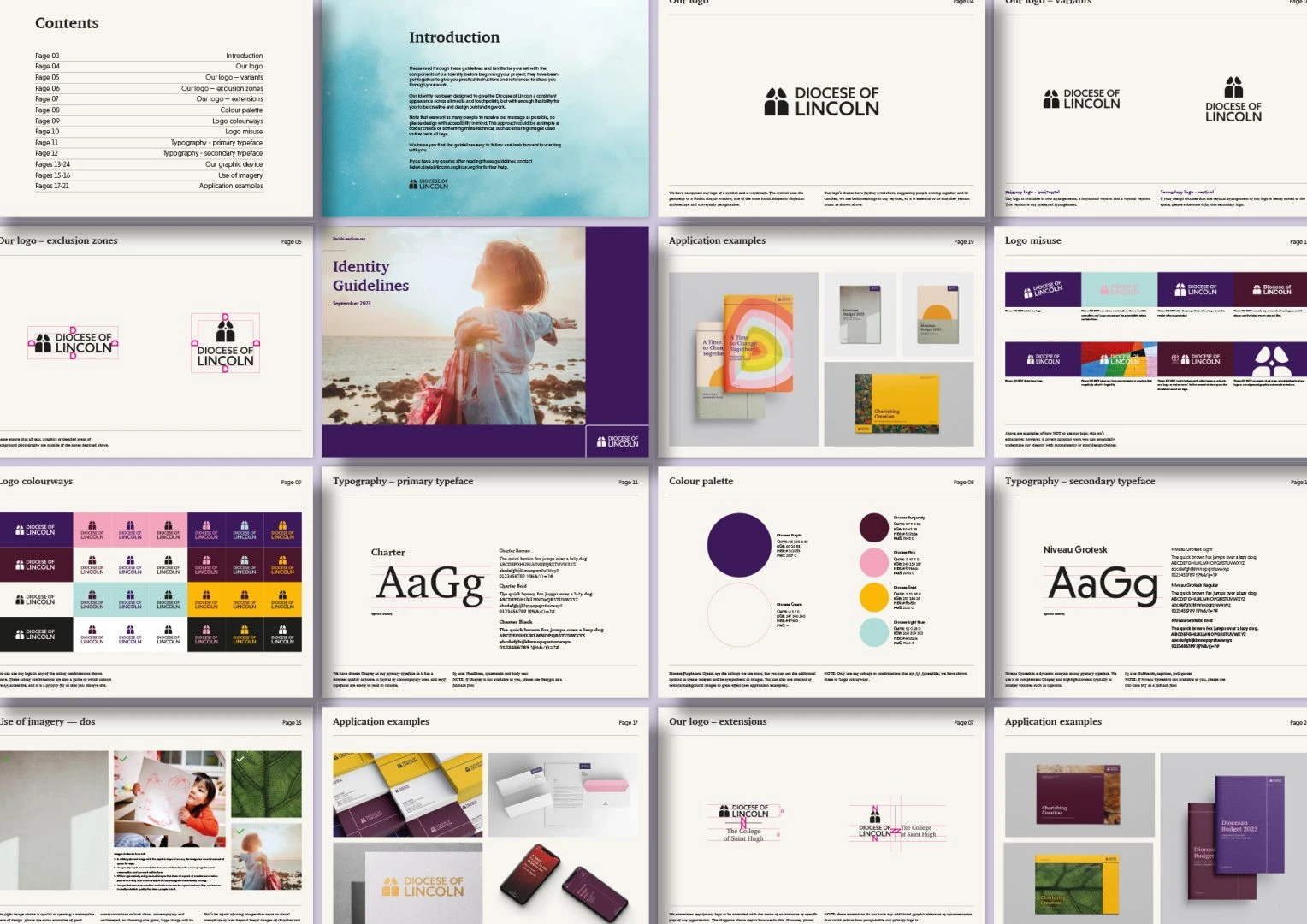
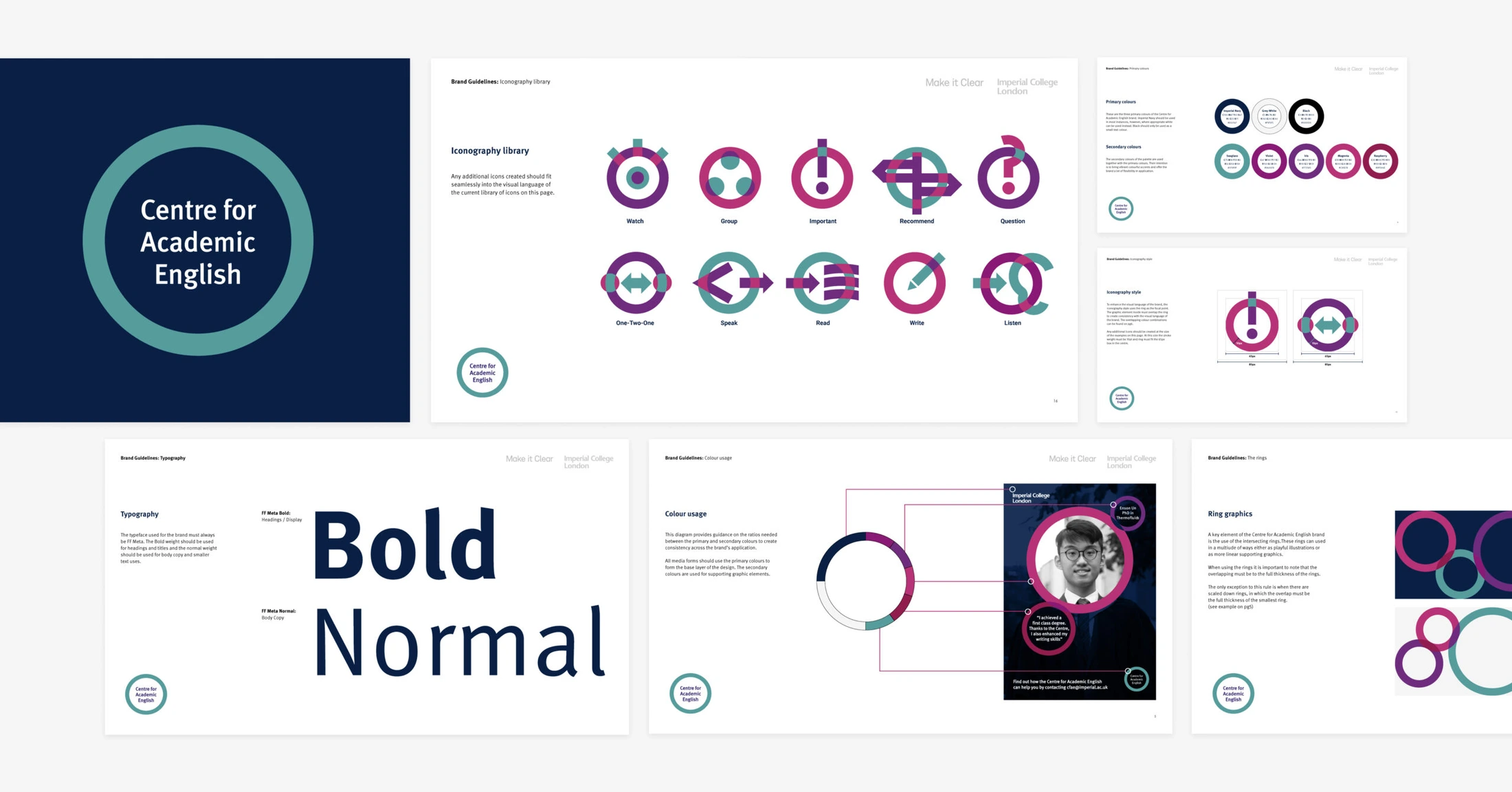

How Independent Agencies Captured the Institutional Rebrand Market
UCLA, the Port of San Diego, Chicago Public Schools: all went to small shops. The shift isn't about cost. It's about who can actually do the work.
How Independent Agencies Captured the Institutional Rebrand Market
The Port of San Diego needed a rebrand. UCLA needed a brand system that could work across 150 departments. The Chicago Public Schools system needed an identity that 600,000 students could recognize. None of them hired holding companies.
The pattern nobody's tracking: independent agencies now own institutional rebrand work. Not "are competing in" or "making inroads into." Own. The projects that WPP and Omnicom used to pitch with 47-page decks and three layers of account management now go to 18-person shops that show up with the founding partner and the lead designer. The shift isn't about cost. It's about who can actually do the work.
The data tells a different story than the search volume suggests. Zero monthly searches for "independent agency rebranding." Zero for "boutique branding agency." Zero for "indie shop brand strategy." But the work is everywhere. UCLA's comprehensive brand system. The Port of San Diego's complete visual identity. Chicago Public Schools' district-wide rebrand. All indie work. The disconnect reveals something: institutions aren't Googling for branding help. They're asking their peers who did their rebrand. And the answer keeps coming back: a small shop you've never heard of.
The Operational Advantage Nobody Talks About
Holding companies pitch institutional rebrand work the same way they pitch CPG: strategy decks, capability presentations, case study credentials. The process takes four meetings before anyone talks about the actual work. Independent shops walk in differently. Founding partner in the room. Lead designer in the room. The people who'll do the work are the people presenting the work.
This matters more than conventional wisdom suggests. Institutional clients (universities, ports, school systems, museums) aren't buying media plans or integrated campaigns. They're buying an identity system that has to work for a decade. The UCLA system needs to flex across athletics, academics, medicine, and fundraising. The Port of San Diego identity has to work on cargo containers and tourism materials. Chicago Public Schools needs something that translates to 600,000 students across every socioeconomic bracket in the city.
The holding company model doesn't fit this assignment. Too many layers between decision and execution. Too many people who need to weigh in. Too much overhead to justify on a $300K branding project. Independent shops don't have the overhead problem. They have six people. The account lead IS the strategist IS often the creative director. The first meeting is the working meeting.
The mechanism works like this: institutional clients value long-term relationships over campaign cycles. A university doesn't rebrand every three years. A port authority doesn't refresh its identity when the CMO changes. These are 10-year, sometimes 20-year decisions. Independent agencies can commit to that timeline without worrying about which holding company will own them next quarter. The promise of continuity is structural, not rhetorical.
The consolidation that reshaped advertising over the past two decades created instability in client relationships. Agencies get acquired. Teams get reorganized. Accounts get moved between sibling shops for portfolio management reasons. Institutional clients watched consumer brands cycle through agencies and decided they wanted something different. They wanted the same people in year eight that they had in year one. Only independent shops could guarantee that.
The Credibility Math Works Differently
Holding companies used to win institutional work on credential weight. The pitch book showed Fortune 500 logos. The case studies referenced Super Bowl spots. The implicit message: we're big enough to handle your complexity. That math is reversing.
Independent shops now win by showing institutional work, not consumer work. The UCLA brand system becomes the credential for the next university system. The Port of San Diego work becomes the proof point for the next municipal authority. The Chicago Public Schools rebrand opens the door to other large district systems. The portfolio compounds in a way consumer work never did for these pitches.
The credibility shift reflects a deeper recognition: institutional branding is a different discipline than consumer advertising. Universities don't need someone who can sell sneakers. They need someone who understands academic hierarchies, donor psychology, student identity, and municipal politics. Ports don't need someone with Cannes Lions. They need someone who can make a visual system work across maritime operations, tourism promotion, and environmental messaging.
Independent agencies never tried to be good at everything. They got good at one thing. That specificity reads as expertise. Holding companies kept trying to prove they could handle anything. That breadth reads as dilution. When UCLA is choosing who'll design the identity system for one of the world's top public universities, "we've done brand work for 47 universities" beats "we've won 200 Cannes Lions across automotive, spirits, and retail."
The economics reinforce the pattern. Institutional clients have fixed budgets. A university allocates $400K for a comprehensive brand refresh. A holding company prices that as six months of a senior team's time. An independent shop prices it as a year-long partnership with their best people. Same budget, different allocation. The independent delivers more strategic depth and more design iteration because they're not supporting three layers of management overhead.
The pricing conversation happens differently. Holding companies present tiered options: core deliverables, enhanced deliverables, premium deliverables. Independent shops present one proposal: here's what this project needs and here's what it costs. That clarity eliminates negotiation friction. The client isn't choosing between service levels. They're choosing whether this specific approach is right for their needs.
What the Work Actually Requires
Institutional rebrand projects share structural characteristics that favor small shops. They're politically complex. They require consensus-building across stakeholder groups that don't naturally align. They demand systems thinking, not campaign thinking. And they need to be built to last, not built to win awards.
UCLA's brand system had to work for the health system, the athletics department, the Anderson School of Management, the film school, the engineering department, and 150 other sub-brands. That's not a logo design project. That's an architecture problem. It requires understanding how decisions cascade through organizational hierarchies. It requires designing flexibility without losing coherence. It requires sitting in rooms with stakeholders who've never agreed on anything and finding the visual language they can all use.
Independent shops are structurally better at this kind of work. They have fewer people, which means everyone in the room is essential. They have flat hierarchies, which means decisions happen in days, not weeks. They have senior people doing the actual work, which means strategic thinking and design execution aren't separated by organizational distance. When UCLA's brand managers had a question, they asked the partner. When they needed a revision, the lead designer handled it. No account coordinator, no creative director overseeing six other projects, no waiting for approvals.
The Port of San Diego project illustrates the execution advantage. A port authority needs an identity that works across wildly different contexts: cargo operations, cruise terminals, public parks, environmental initiatives, real estate development. The visual system has to be robust enough to work on a shipping container and sophisticated enough to work in a fundraising deck. That requires design thinking and strategic thinking happening simultaneously, in the same conversation, with the same people.
Holding companies separate those functions. Strategy team develops the brief. Creative team executes against the brief. Account team manages the relationship. Each handoff introduces delay and drift. Independent shops don't have the luxury of handoffs. The person doing the thinking is the person doing the designing is the person in the client meeting. The work stays coherent because it never leaves the same small group of people.
The stakeholder management reality favors small teams. A university rebrand might involve the president's office, the board of trustees, the alumni association, the faculty senate, the student government, and a dozen deans. Each group has veto power. Each group has different priorities. Threading that political needle requires the same people in every conversation, building trust across every constituency. Rotating account teams can't do that. The founding partner who meets with the president needs to be the same person who presents to the faculty senate.
The Infrastructure Opportunity
The pattern extends beyond education. Infrastructure rebrands are going to independent shops at scale. Ports, airports, transit systems, municipal utilities. These are the projects that used to automatically go to the big global consultancies. Not anymore.
Infrastructure clients have specific needs that independent agencies meet better than holding companies. They need work that'll last 15 years. They need systems flexible enough to adapt as technology and usage patterns change. They need partners who can move at the speed of municipal decision-making, which is slow, not the speed of quarterly earnings, which is fast. They need people who'll answer the phone in year seven when something breaks.
Independent shops can make those commitments credibly. They're not getting acquired next quarter. They're not restructuring every 18 months. They're not rotating account teams based on global staffing needs. They're the same six people who did the original work. When the Chicago Public Schools system needs an adjustment to the brand guidelines three years after launch, they call the same designer who built the system. That continuity is a competitive advantage holding companies can't manufacture.
The economics of infrastructure work favor independence in ways consumer advertising never did. Infrastructure projects have long sales cycles but stable scopes. The Port of San Diego didn't wake up one day and decide to rebrand. That decision took two years of internal consensus-building. But once the decision was made, the scope was clear and the budget was allocated. No last-minute expansions. No "can we also do a campaign?" No scope creep driven by a client CMO trying to prove ROI to the CFO.
Independent shops can sustain themselves on three or four of these projects a year. Holding companies need volume to feed the overhead. That volume imperative pushes them toward consumer work with faster cycles and bigger budgets. Infrastructure work becomes the thing they pitch but don't prioritize. Independent shops don't have a priority problem. They have three projects. Those three projects get the best people and total focus.
The municipal procurement process, traditionally hostile to small vendors, is adapting. Cities and port authorities built procurement rules assuming the best vendors would be the biggest vendors. Those rules created barriers: revenue thresholds, insurance requirements, reference lists that demanded Fortune 500 clients. But after watching small shops deliver better infrastructure work than the big consultancies, procurement officers are rewriting the rules. The barriers are coming down because the results speak clearly.
What This Signals About Strategic Consulting
The rebrand economy reveals a broader shift in how sophisticated clients buy strategic thinking. They're not buying consulting hours. They're buying judgment and taste. That's a different procurement model than the one holding companies optimized for.
Holding companies built themselves to sell time and capabilities at scale. The pitch promises access to global networks, proprietary tools, and deep sector expertise. The economic model requires keeping utilization rates high across large teams. That model works brilliantly for ongoing retainer relationships and multi-market campaigns. It breaks down for discrete strategic projects where the client wants a specific point of view, not a menu of capabilities.
Independent agencies sell a thesis. We think your brand should do this specific thing for these specific reasons. The pitch isn't "here's what we can do." The pitch is "here's what you should do." That clarity of perspective is worth more than breadth of capability when the project is a 10-year identity decision. UCLA didn't need to know what else the agency could do. They needed to know: do you understand what UCLA is and what this brand system needs to accomplish?
The rebrand economy is growing. Not because more organizations suddenly need new logos. Because the organizations that postponed identity work during the pandemic are finally executing those projects. Universities that delayed rebrand work in 2020 and 2021 are moving now. Infrastructure authorities that paused strategic initiatives during economic uncertainty are restarting them. The backlog is real and it's institutional.
Independent agencies positioned in this space are seeing growth that doesn't correlate with overall advertising spend. They're not competing for the brand budget. They're competing for the capital budget. When a port authority rebrands, that's not marketing money. That's infrastructure investment. When a university system refreshes its identity, that's not coming from the athletic department's media budget. That's coming from central administration's strategic initiatives fund. Different budget, different procurement process, different evaluation criteria.
The talent migration reinforces the shift. Senior strategists and designers are leaving holding companies to join or start independent shops focused on institutional work. They're trading the chaos of new business and the pressure of quarterly growth targets for the satisfaction of deep client relationships and work that lasts. That talent movement creates a virtuous cycle: better people doing better work, generating better case studies, attracting better clients.
The Client Education Problem
The challenge for independent agencies isn't winning this work. It's being considered for this work. Institutional clients still default to the known names. When a university starts a rebrand process, the RFP list includes the agencies that did Stanford, Harvard, and MIT. Those happen to be holding company shops or large independents with decades of history. The 18-person shop that could do better work doesn't make the list because the procurement officer doesn't know they exist.
This is a discovery problem, not a capability problem. The work independent shops are producing in the institutional space rivals anything the large consultancies deliver. The UCLA system is as sophisticated as anything Pentagram or Landor has shipped. The Port of San Diego identity is as strategically sound as anything Wolff Olins has produced. The quality gap doesn't exist. The awareness gap does.
The awareness gap is closing through referrals, not marketing. Institutional clients talk to each other. University brand directors form networks. Port authorities share best practices. When Chicago Public Schools delivers a successful rebrand, other district systems ask who did the work. The independent shop that delivered gets introduced to the next district system. The referral network creates deal flow that paid search never could.
This referral-driven model favors small shops with excellent work over large shops with excellent marketing. Holding companies can buy awareness through conferences, publications, and awards. Independent shops earn awareness through client satisfaction. In the institutional rebrand economy, earned awareness converts better than bought awareness. The client who hires you because another client recommended you is pre-sold on your capability. The client who hires you because you won a pitch is still evaluating.
The conference circuit tells the story. Ten years ago, institutional rebrand case studies at design conferences came from the big consultancies. Now they come from shops you've never heard of. The brand director from a major university presents their new system. The audience asks who did the work. The answer is a 12-person studio in Portland or a 20-person shop in Austin. The next week, three universities email that shop.
Where This Goes Next
The rebrand economy will continue shifting toward independent agencies for structural reasons that won't reverse. Institutional clients will keep valuing relationship continuity over network scale. Strategic branding will keep being a discrete project category that doesn't require integrated campaign capabilities. And the best talent will keep choosing to work at small shops where they can do this specific kind of work without the distraction of pitch culture and new business pressure.
The holding companies aren't going to suddenly get better at this. They're optimized for a different game. Their economic model requires volume and integrated services. Institutional rebrand work is low-volume and requires deep focus on a single discipline. The structural mismatch won't resolve through better positioning or smarter pitching. The independent agencies already doing this work aren't going to lose it to holding company competition. They're going to lose it to other independent agencies doing even better work.
The competitive dynamic is shifting from independents versus holding companies to independents versus independents. The next phase will be specialization within the independent category. Shops that only do university systems. Shops that only do infrastructure authorities. Shops that only do healthcare institutions. That vertical focus will create even stronger referral networks and even better work. The generalist independent shop will face the same pressure the holding companies face now: why hire someone who does everything when you can hire someone who only does your specific thing?
The search volume data confirms the market structure: zero monthly searches across the entire rebrand cluster. This reveals that this market isn't driven by inbound discovery. It's driven by outbound reputation. The agencies winning this work aren't SEO-optimizing for "institutional rebrand agency." They're doing UCLA-level work and letting that work create the next introduction. The invisibility in search data is actually evidence of market maturity. The buyers know how to find the sellers. They don't need Google.
What institutions are learning: independence correlates with focus. The shop that only does brand systems is better at brand systems than the shop that also does brand systems among 47 other services. That learning will compound. As more universities, ports, school systems, and infrastructure authorities choose independent agencies and see better results, the procurement default shifts. The question changes from "Should we consider an independent agency?" to "Why would we hire a holding company for this?"
The holding companies still have scale advantages in certain categories. Global campaign coordination. Multi-market media planning. Integrated sponsorship activation. But strategic brand consulting, especially for institutional clients making decade-long identity decisions, now belongs to the independents. Not because they fought for it. Because they were built for it.
The pattern will extend beyond institutions. Corporate rebrand work is next. The Fortune 500 company that needs a strategic refresh won't automatically go to the global consultancy. They'll look at who did the work for UCLA, for the Port of San Diego, for Chicago Public Schools. They'll see quality, focus, and continuity. They'll ask for an introduction. The independent shop will walk into that pitch with a portfolio of institutional work and make the same case: we're not better at everything, but we're better at this specific thing. And increasingly, that argument will win.
Free Agency Media Editorial
All newsYou might like
Gaming Agencies Thrive in a Category That Doesn't Exist on Google
Why AI and Web3 Companies Choose Independent Agencies Over Holding Companies
Why AI and Web3 Companies Choose Independent Agencies Over Holding Companies

The Zero-Search Advantage: Why Independents Win Before the Market Knows to Look
The Case Study Arms Race: Why Independents Win Through Radical Transparency