Why Fortune 500 Brands Are Hiring Independent Agencies as AOR Partners
Independent shops are landing enterprise AOR contracts at rates unthinkable five years ago. They're not getting lucky: they're reverse-engineering the holding company playbook and building something better.
The search volume tells one story: zero monthly queries for "independent agency of record." The industry tells another. Independent shops are landing enterprise AOR contracts at a rate that would have been unthinkable five years ago. The gap between what people search for and what's actually happening reveals a structural shift the search algorithms haven't caught up to yet.
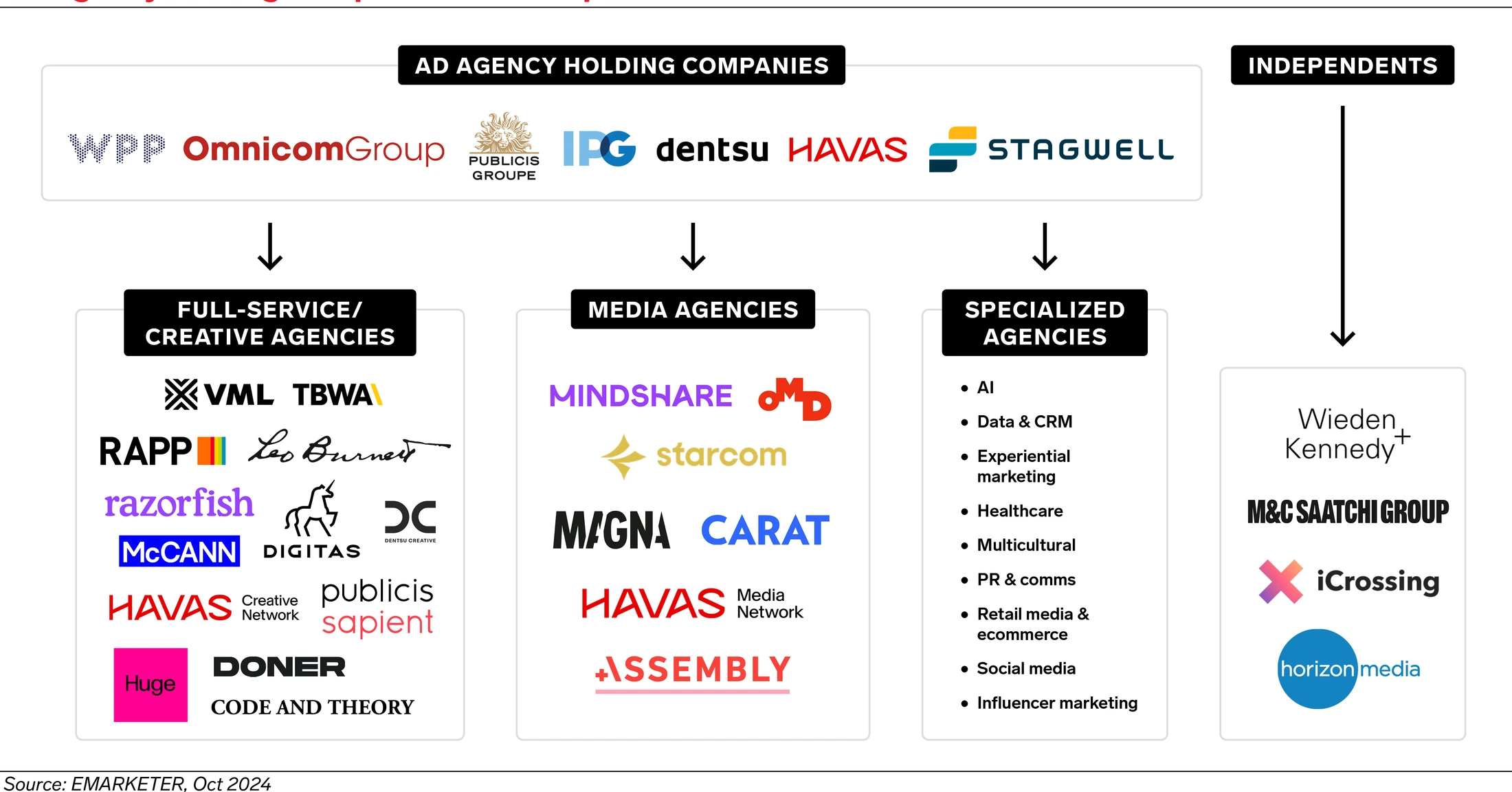
This isn't about small shops getting lucky. This is about independents reverse-engineering the holding company playbook, keeping what works, discarding what doesn't, and building something entirely different. The Fortune 500 CMOs who brief these pitches aren't choosing independents despite their limitations. They're choosing them because of their advantages.
The Capability Stack Nobody Saw Coming
The traditional objection went like this: independent agencies can't service enterprise accounts because they lack geographic reach, 24/7 support infrastructure, and the specialized capability stack a Fortune 500 brand requires. Media planning in 47 markets. Production resources across four time zones. Legal compliance teams who understand GDPR, CCPA, and whatever acronym Australia just invented.
That objection assumed independents tried to build all of it in-house. They didn't.
The new model looks more like platform orchestration than traditional agency structure. One shop handles strategy and creative. Another handles media. A third manages production. A fourth owns analytics and measurement. The independent agency acts as quarterback, not full roster. The CMO gets a single point of contact. Behind that contact sits a network of specialists who've worked together before, bill through a single entity, and operate under unified NDAs.
This isn't revolution. It's intelligent adaptation. Holding companies spent decades acquiring capabilities they rarely deployed efficiently. The pitch deck promised "fully integrated solutions." The reality delivered 14 different P&Ls fighting over the same budget line. Independents looked at that structure and built something leaner: orchestrated networks instead of acquired empires.
The numbers prove it works. Even with zero search volume for "independent agency of record," the actual AOR appointments keep happening. The searches haven't caught up because the language hasn't settled. CMOs aren't Googling "indie shop AOR wins." They're asking their networks: "Who actually does great work and won't bury me in holding company politics?"
What Changed in the Pitch Room
The pitch dynamics shifted when independents stopped apologizing for what they don't have and started selling what they do. The old pitch: "We're small but mighty." The new pitch: "We're structured exactly how modern brands need to work."
Three specific changes matter most.
First: the decision-making pitch. Independents sell speed to yes. No holding company review boards. No quarterly earnings pressure forcing safe recommendations. The creative director who presents the work is the same person who approved it that morning. Fortune 500 brands watching their holding company partners take 11 weeks to get approval on a social video suddenly found that intolerable. Independents pitch same-week turnarounds not as heroic exceptions but as standard operating procedure.
Second: the conflict pitch. Holding company networks operate under byzantine conflict policies that often block entire categories. One agency wins Toyota, suddenly the whole network can't pitch Honda. Independents pitch the opposite: your competitors aren't in our building. Your strategy deck won't sit on the same server as theirs. The paranoia that comes with category conflict dissolves when the shop only works with one automotive brand, full stop.
Third: the talent pitch. Holding companies pitch "global resources." Independents pitch "the actual people." Names on slides correspond to people in the room. The strategy lead presenting is the strategy lead executing. No bait-and-switch between pitch team and delivery team. Fortune 500 procurement departments spent years getting burned by the gap between promised and delivered talent. Independents eliminated the gap by keeping teams small enough that everyone presenting has to be everyone executing.
The structural advantage compounds. Small teams move faster. Faster teams iterate better. Better iteration produces better work. Better work wins more pitches. More pitches fund better talent. Better talent wins bigger accounts. The cycle feeds itself.
The Infrastructure Question Gets Answered
The hardest objection to overcome wasn't creative. It was operational. Can a 40-person shop really service a brand doing $2 billion in annual revenue across 30 markets?
The answer is yes, but not how holding companies assumed. Independents didn't try to replicate holding company infrastructure. They built something categorically different: distributed production networks, on-demand specialist partnerships, and technology platforms that automate what used to require headcount.
Geographic coverage stopped being a headcount question and became a network question. Instead of maintaining offices in 12 cities, independents partnered with production companies, local strategists, and regional media specialists. The cost structure inverted. Holding companies carry fixed overhead whether clients need Bangkok or not. Independents activate Bangkok when Bangkok matters and shut it down when it doesn't.
Technology platforms filled gaps that used to require bodies. Project management software that a holding company would customize over 18 months, independents deploy in three weeks. Digital asset management that a holdco would staff with four people, an independent automates with one person and a $400/month SaaS tool. The efficiency gap is staggering. Holding company overhead averages 40-60% of revenue. Independents run at 20-30%. That differential funds creative talent at market rate, timelines 40% faster, or client costs 30% lower. Usually all three.
The compliance and legal infrastructure proved easier to solve than expected. Independents don't need in-house legal teams. They need lawyers who understand advertising on retainer. The external specialist costs less than the internal generalist and provides better expertise. Data privacy, brand safety, accessibility compliance: all of it gets handled through partnerships rather than departments.
The Service Model That Actually Scales
The core contradiction in independent AOR wins: they're servicing enterprise accounts by rejecting enterprise agency structure. The holding company model assumes scale requires hierarchy. Independents proved scale requires clarity.
The service model breaks into three layers.
Strategic core: the named agency everyone briefs. This is where brand strategy lives, where creative concepting happens, where the client relationship sits. This team stays intentionally small. Eight to twelve people who know the brand better than anyone else, move at decision-making speed, and own quality control across everything that ships.
Specialist network: the vetted partners who activate when needed. Media planning through an independent media agency the core shop has worked with for years. Production through a roster of directors, photographers, and post houses who've already signed the NDAs and understand the brand guidelines. Analytics through a measurement partner who knows the KPI stack and dashboards from previous campaigns. This layer flexes based on need. A social-heavy quarter scales up short-form video production. A brand repositioning scales up research and strategy. The client sees one team. Behind that team sits a network that expands and contracts with demand.
Technology infrastructure: the platforms that make distributed teams function like centralized ones. Project management, digital asset management, creative review, legal approval routing: all of it runs through software that costs a fraction of what it would cost to staff equivalently. The independents winning enterprise AOR contracts didn't build proprietary technology. They got extremely good at configuring commercial platforms to work like they'd been custom-built.
This three-layer model solves the scale problem without creating the bloat problem. Clients get enterprise-grade service delivery. Independents maintain the speed and quality that made them competitive in the first place. The holding company assumption that scale requires hierarchy turned out to be false. Scale requires coordination. Coordination requires clarity. Clarity works better with fewer people, not more.
What Fortune 500 Procurement Actually Buys
The pitch deck says "creative excellence." The contract says something more specific. Fortune 500 procurement departments evaluate agency partners on six criteria: creative quality, operational reliability, financial stability, geographic reach, category expertise, and cost efficiency. Independents had to answer all six credibly to win AOR contracts worth eight figures annually.
Creative quality became table stakes faster than expected. Cannes Lions 2023-24 data proved it first: independent agencies won 23% of Grand Prix awards while representing less than 8% of total entries. The work spoke for itself. Procurement couldn't dismiss creative quality when the evidence stacked that high.
Operational reliability required proof, not promises. Independents started documenting everything. SLA compliance reports. Campaign delivery timelines. Issue resolution speed. The data showed independents outperforming holding company partners on almost every operational metric. Faster creative approvals. Fewer missed deadlines. Better stakeholder communication. The holding company pitch of "We're reliable because we're big" collapsed when the reliability data favored smaller shops.
Financial stability was the hardest proof point. Fortune 500 procurement doesn't sign with agencies that might disappear in 18 months. Independents solved this through transparency. Audited financials. Client diversification metrics. Revenue runway documentation. The shops winning enterprise AOR contracts weren't hiding their size. They were proving their stability through numbers that holding companies rarely volunteered. One major CPG brand's procurement team reported that the independent agency they hired provided more financial transparency in the pitch than the holding company network they replaced.
Geographic reach stopped being about offices and became about outcomes. Procurement learned to ask different questions. Not "How many offices do you have?" but "Show me three campaigns you've delivered across 15+ markets." Independents brought case studies. Market-by-market activation timelines. Local partner rosters with performance data. The proof mattered more than the infrastructure.
Category expertise proved easiest to demonstrate. Holding companies spread talent across dozens of categories. Independents concentrated expertise. The shop that only works in healthcare knows healthcare better than the holding company shop that splits time between healthcare, automotive, and financial services. Depth beat breadth when procurement evaluated who actually understood their business.
Cost efficiency closed deals. Independents pitched 30-40% cost savings compared to equivalent holding company scope. Not through cheaper talent. Through leaner operations. The savings showed up in faster timelines, fewer revision cycles, and overhead structures that didn't require clients to subsidize layers of management they'd never meet.
The Contracts That Make It Stick
AOR agreements between Fortune 500 brands and independent agencies look different than traditional holding company contracts. The differences reveal what's actually changing in the agency-client relationship.
Scope flexibility replaced rigid SOWs. Traditional AOR contracts specified deliverables down to social post counts and video lengths. The new contracts specify outcomes. Brand awareness targets. Engagement benchmarks. Sales lift goals. How the independent agency achieves those outcomes stays flexible. Clients discovered they preferred buying results over buying outputs. Independents discovered they could deliver results more efficiently when clients stopped micromanaging inputs.
Performance incentives tied agency compensation to business results. Base retainers cover operational costs. Performance bonuses reward outcome achievement. One major retail brand structured their independent AOR contract with 40% of total compensation tied to same-store sales growth. The independent agency hit the target in year one. The holding company agency they replaced never agreed to performance-based compensation in the first place.
Partnership clauses formalized the specialist network model. Contracts named the key partners: which media agency, which production companies, which analytics firm. Clients wanted to know who was touching their brand. Independents provided full transparency. The contracts specified that partnerships couldn't change without client approval. This eliminated the holding company habit of swapping vendors mid-contract to optimize their own margins.
Exit terms protected both sides. Clients negotiated 90-day outs instead of annual commitments. Independents negotiated kill fees that covered ramp-down costs. The shorter commitment periods paradoxically created more stability. Clients felt less locked in. Agencies had to keep performing. The relationship stayed healthy because either side could leave if it wasn't.
Review cycles shortened. Annual performance reviews replaced quarterly business reviews that accomplished nothing except burning hours. The reviews focused on three questions: Are we hitting the agreed outcomes? Is the relationship working? What needs to change? The bureaucracy that plagued holding company AOR relationships disappeared when independents and clients agreed to evaluate what mattered instead of what tradition demanded.
What Happens Next
The trend line points one direction: more Fortune 500 brands briefing independent agencies on AOR scopes that would have gone straight to holding companies in 2018. The zero search volume for "independent agency of record" will eventually catch up to reality. The language will settle. The queries will start appearing. By then, the pattern will be established enough that it won't feel like news.
Three developments to watch.
First: holding companies will try to acquire the independents winning these contracts. The acquisition pattern always follows the same arc. Independent wins major account. Holding company makes offer. Independent sells or doesn't. If they sell, the independence that made them competitive disappears within 24 months. If they don't sell, they keep winning. The Fortune 500 brands watching this pattern are learning to ask explicit questions in procurement: Are you considering acquisition offers? What's your succession plan? How do you maintain independence long-term? The questions reveal anxiety that the shop they're hiring might not stay the shop they hired.
Second: more independents will form permanent network partnerships instead of project-based collaborations. The distributed model works. Formalizing it works better. Expect to see independent agencies, media shops, production companies, and analytics firms creating alliance structures with shared NDAs, unified billing, and pre-negotiated pricing. The pitch becomes: "We're not one agency trying to do everything. We're five specialists who've worked together for three years and function as one team." That pitch beats "We're one massive agency with specialists somewhere in our 3,000-person organization."
Third: the capability requirements will keep rising. The independents winning AOR contracts in 2025 needed strategy, creative, and network coordination. The ones winning in 2027 will need AI infrastructure, real-time personalization platforms, and commerce integration. Technology expertise becomes the differentiator. The holding companies assumed their scale advantage in technology would prevent independent competition. The reality: cloud platforms and AI tools democratized capabilities that used to require enterprise budgets. A 40-person independent can deploy marketing technology that a 4,000-person holding company can't implement because of legacy system constraints.
The Fortune 500 brands who made the first bets on independent AOR partners are watching results. If the results hold, more brands follow. If the results disappoint, the trend stalls. The early evidence says the results are holding. Campaign performance, cost efficiency, and speed to market all favor the independents. The holding company advantages (scale, resources, global reach) keep mattering less than the independent advantages: speed, focus, and talent density.
The search volume will eventually catch up. When it does, the story won't be about independents breaking into enterprise accounts. It will be about why it took enterprise accounts so long to realize independents could service them better than the networks they'd relied on for decades. The counterintuitive observation that opened this piece stops being counterintuitive. It becomes obvious. The gap between search behavior and market reality closes. By then, the independents will have moved on to the next structural advantage the data hasn't revealed yet.
Free Agency Media Editorial
All newsYou might like
Gaming Agencies Thrive in a Category That Doesn't Exist on Google
Why AI and Web3 Companies Choose Independent Agencies Over Holding Companies
Why AI and Web3 Companies Choose Independent Agencies Over Holding Companies

The Zero-Search Advantage: Why Independents Win Before the Market Knows to Look
The Case Study Arms Race: Why Independents Win Through Radical Transparency