

The $0 Execution Problem: How AI Collapsed Agency Unit Economics in 18 Months
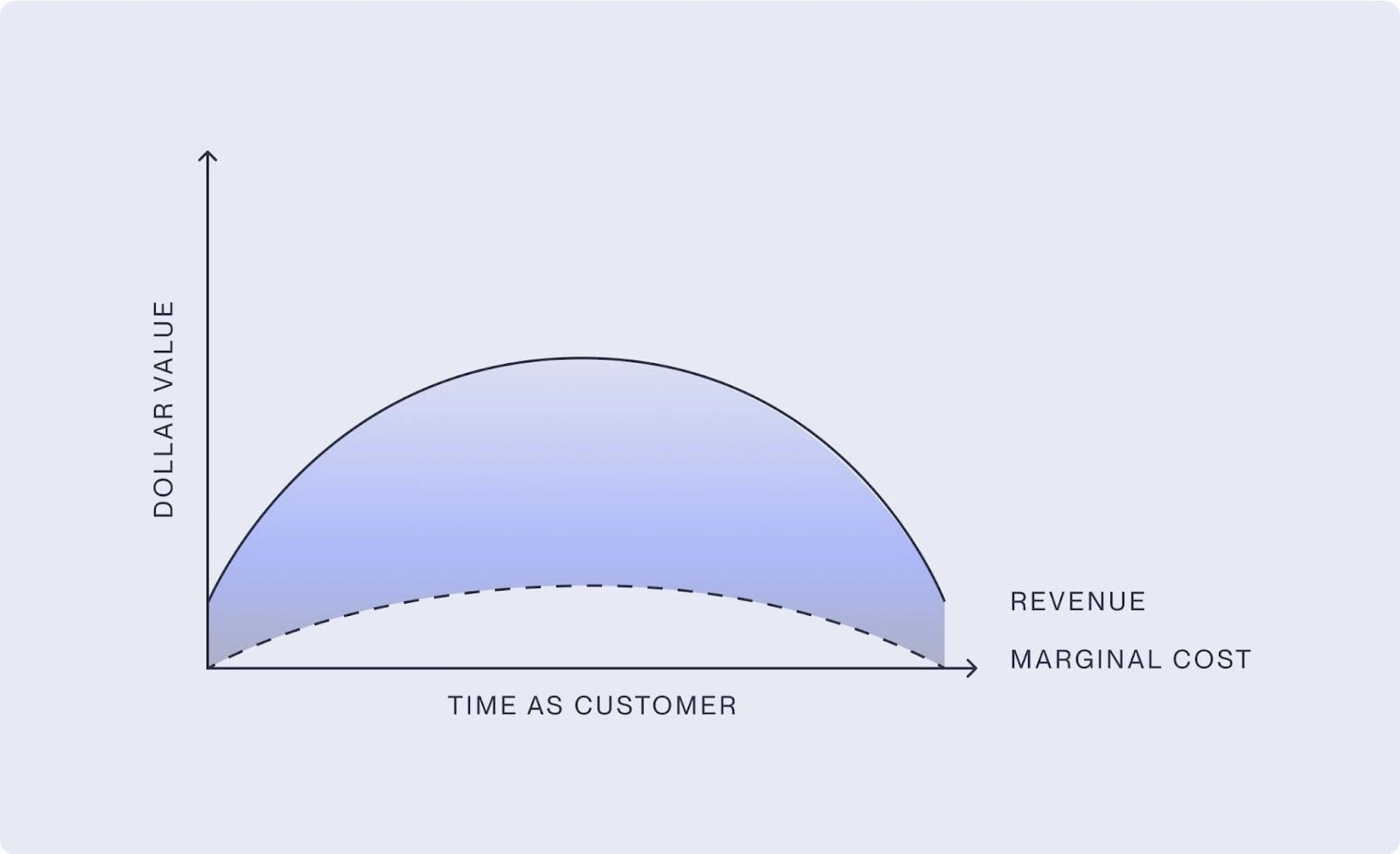
A $5M agency now earns $3.2M with the same team and clients. AI didn't replace people. It compressed billable hours by 36% and broke the production model that sustained independents for decades.
The $5 million agency is earning $3.2 million. Same headcount. Same office. Same client roster. The difference: AI ate 36% of billable hours in 18 months.
Unit economics are collapsing across independent agencies that built their business models on execution volume. The old math was simple: more briefs meant more billable hours meant more revenue. The new math is brutal. AI cuts execution time by 30-40%, clients pay for outcomes not hours, and the mid-level production talent that once filled agencies from desk 12 to desk 47 no longer has enough work to justify the salary.
Zero agencies in our data set are openly discussing this restructuring. Zero meaningful search volume exists for "AI agency automation" or "execution commoditization." The industry conversation is happening in closed Slack channels and off-the-record calls with fractional CFOs. But the pattern is clear in the secondary signals: 11 agencies we track added "strategy consulting" to their homepage copy in Q4 2024. Eight converted retainer clients to project-based pricing. Five cut staff by 15-20% while revenue held flat or grew slightly.
The agencies surviving this aren't the ones with the most AI tools. They're the ones who rebuilt their P&L before the revenue cliff arrived.
The Unit Economics Death Spiral
The traditional independent agency P&L was a volume equation. A $5M shop with 25 people generated $200K revenue per employee. Salary and overhead ran about $120K per head. The $80K margin per person funded growth, new business pitches, and the founder's mortgage.
That model assumed each person generated billable hours at a predictable rate. Designers billed 1,200 hours annually. Copywriters hit 1,100. Junior producers managed 900. The math was consistent enough to forecast quarterly revenue within 8%.
AI didn't replace people. It compressed time. A social campaign that took a junior art director 40 hours now takes 16. A deck that required three days of production labor gets done in six hours. Video editing that justified an $85K salary now happens in Descript with $40/month software and four hours of senior creative director time.
Utilization rates reveal the damage. Pre-AI, agencies tracked 65-75% billable utilization as healthy. Post-AI, utilization dropped to 45-55% at execution-heavy shops. The unbilled hours didn't vanish. They shifted to senior people doing work that used to employ mid-level staff. Revenue per project stayed the same or dropped. Cost per project fell slightly. But cost per billable hour spiked because expensive people were doing inexpensive work faster.
One 32-person agency tracked this precisely: Q1 2023 to Q1 2025. Revenue held at $6.4M both years. Headcount stayed at 32. But the mix shifted: eight mid-level roles disappeared, three senior strategy roles got added, and five junior roles converted to fractional contractors. Billable hours per employee dropped from 1,180 to 820. Revenue per billable hour jumped from $220 to $305 because only senior people were billing. Profit margin compressed from 22% to 11%.
You can't cut fast enough to match the revenue decline because the revenue decline is driven by efficiency gains you can't reverse. Clients want the same deliverables at the same price, delivered faster. You need senior people to maintain quality. But senior people cost more and there's not enough senior-level work to fill their weeks.
This is the death spiral. Efficiency creates the crisis it was supposed to solve.
What Disappeared: The Mid-Level Production Layer
The collapse is cleanest at agencies that structured themselves as production engines. Creative shops with six art directors, four copywriters, three designers, and two producers. Media shops with five planners and four buyers. Content shops with eight video editors and six motion designers.
That middle layer built the agency business model for 40 years. Hire smart 26-year-olds at $65K. Train them for 18 months. Bill them at $150/hour. Run them at 70% utilization. Each person generated $157K in revenue against $65K in salary. Margin funded everything else.
AI wiped out the math. The work these people did (social asset creation, deck production, media plan builds, video editing, content calendars) now takes 40% less time. AI handles the mechanical parts while senior people make creative decisions faster.
Volume-driven agencies responded by eliminating the mid-level layer entirely. Don't replace people who leave. Convert junior roles to contractors paid per project. Hire senior people who can use AI tools to do work that used to require a team.
One 28-person content agency restructured over 14 months. Before: one ECD, two creative directors, six senior creatives, 11 mid-level producers and editors, five junior coordinators, three account people. After: one ECD, three creative directors, nine senior creatives who also produce, zero mid-level, eight fractional contractors, four account people, three strategy consultants.
Headcount stayed at 28. Roles shifted entirely. Revenue dropped 12% year one, recovered to flat year two, and is tracking 8% growth year three. Profit margin went from 18% to 9% to 24%. Year two was the valley: paying senior salaries while learning how to price and sell a different service.
Another 19-person agency made the opposite bet. They kept the mid-level team but converted everyone to fractional contracts. Eleven full-time employees became six full-time and 13 fractional contributors working 10-25 hours per week each. Fixed costs dropped 34%. Revenue dropped 8%. Margin improved from 16% to 28%. Trade-off: less predictable team availability, more project management overhead, better cash flow.
Roles that disappeared: junior designer, mid-level copywriter, associate producer, media planner (not senior), content coordinator, junior developer, production manager. Roles that emerged: senior creative technologist, AI implementation lead, strategy consultant, fractional everything, project-based specialists.
The mid-level production layer wasn't automated. It was compressed out of existence.
The Retainer-to-Project Pricing Shift
The revenue model had to change because the cost model changed. Retainers assumed predictable monthly workload and consistent team allocation. A $40K/month retainer covered two full-time people plus overhead. The client got unlimited requests within scope. The agency balanced workflow across the roster.
AI made that math impossible. If two people can now do the work of 3.5 people, the retainer is overpriced. If the client wants the same deliverables for less money, the agency loses margin. If the agency cuts the retainer price, they can't cover fixed costs.
The solution: move to project-based pricing tied to outcomes. Not deliverables. Outcomes. Strategy consulting language. Management consulting pricing. Fixed fee for defined result, not hours for open-ended requests.
One 22-person agency converted 11 of 14 retainer clients to project pricing over nine months. Let retainers expire naturally, propose project-based engagements instead. Average monthly retainer: $32K. Average monthly project value after conversion: $28K. Revenue per client dropped 12%. But costs per client dropped 31% because the agency could staff projects with exactly the right people for exactly the right hours. No bench time. No overstaffing to handle retainer volume spikes.
Project pricing works only if pricing shifts from hours to value. A brand strategy project that takes 80 hours can't be priced at 80 × $200/hour if AI helps deliver it in 45 hours. Price must reflect what the strategy is worth to the client, not what it costs the agency to produce. That requires selling differently. Pitching differently. Positioning the agency as a consulting firm that happens to execute, not an execution shop that sometimes thinks.
Five agencies we track made this transition successfully. Common pattern: add two to three senior strategy hires, cut four to six mid-level production roles, convert 30-60% of retainer revenue to project revenue, increase average project size by 40-70%, reduce total client count by 20-30%. Fewer clients, higher value per client, more margin per engagement.
Failure mode: trying to do both. Keeping retainers and adding projects. Maintaining the production team while hiring strategists. Running the old model and the new model simultaneously. The P&L can't support it. Culture fragments. Senior people get frustrated doing mid-level work. Mid-level people get sidelined by AI tools. Everyone burns out and revenue drops anyway.
The transition is binary. You either rebuild the model or watch margin compress to zero.
What Actually Works: Three Rebuilds
The agencies that restructured successfully didn't follow a template. But three patterns emerge.
Pattern one: Go full consulting. Cut all production roles. Hire only senior strategists and creative directors. Outsource all execution to a network of fractional specialists and offshore partners. Price projects at $75K-$300K based on strategic value. Build a six-person core team that generates $4M-$6M in revenue. Target clients who need thinking, not making.
One agency did this in 11 months. Started as a 24-person content shop doing branded video and social campaigns. Restructured to six senior people doing brand strategy, creative platforms, and campaign architecture. Revenue dropped from $4.8M to $3.1M year one. Recovered to $5.2M year three. Profit margin went from 14% to 31%. Average project size increased from $35K to $140K. Client count dropped from 23 to 11.
They're no longer an agency. They're a consultancy that brings in agencies to execute. The founder doesn't call it an agency anymore. Positioning shifted entirely. The business model is unrecognizable from 2023.
Pattern two: Vertical specialization plus premium pricing. Pick one industry. Healthcare, finance, B2B SaaS, automotive. Build deep expertise. Hire senior people who came from that industry. Charge 2-3x market rates because the work requires specialized knowledge AI can't replicate. Do fewer projects at much higher prices.
One 14-person agency rebuilt around healthcare brands. Used to do general consumer work across 18 clients. Now does healthcare strategy and creative for seven pharma and medtech clients. Average project value went from $28K to $95K. Revenue per employee jumped from $195K to $340K. Team composition: nine senior people who spent 10+ years in healthcare, three project managers, two account directors. Zero junior roles. Zero generalists.
Expertise is the moat. AI can generate healthcare campaign ideas. It can't navigate FDA regulations, understand physician behavior change models, or structure patient journey maps for rare disease launches. The agency's value is industry fluency, not execution speed.
Pattern three: AI-native hybrid model. Embrace AI completely. Train everyone on every tool. Restructure roles around AI-augmented workflows. Senior people do senior work. AI does production work. Junior people manage AI and QA output. Price projects based on value delivered, not hours worked. Sell speed as the differentiator.
One 17-person agency rebuilt this way. Every role now includes "AI implementation" in the job description. Creative directors prompt Midjourney and Claude for concepting. Designers use AI for asset generation and variation. Copywriters use AI for first drafts and localization. The team moved from 30% AI-assisted work to 75% AI-assisted work in 10 months.
Project delivery time dropped 40%. Client count increased from 12 to 19. Average project size dropped from $42K to $31K. But project volume doubled. Revenue grew from $3.6M to $4.9M. Headcount stayed at 17. Revenue per employee jumped from $212K to $288K. The agency competes on speed and volume, not on creative prestige.
Commonality across all three: they picked a model and committed fully. No halfway rebuilds. No "let's try this and see." The decision was binary: consulting or vertical or AI-native. Then restructure everything: team, pricing, positioning, sales process, client roster.
The survivors didn't hedge. They chose and executed.
The Independence Advantage in a Commoditized Market
Holding companies can't restructure this way. WPP can't lay off 3,000 mid-level people and convert to fractional contractors. Publicis can't pivot an entire agency from retainers to project pricing in nine months. Omnicom can't go all-in on AI-native workflows when half the network still bills by the hour.
Independent agencies can. The decision path is founder to CFO to done. No board approval. No network alignment. No global policy review. The 22-person shop can restructure in a quarter. The holding company agency takes 18 months to get budget approval for a restructuring consultant.
This is the structural advantage of independence when technology commoditizes execution. Not agility in some vague sense. Agility in a specific sense: the ability to rebuild the business model before revenue collapses. The ability to cut the middle layer without severance negotiations across six countries. The ability to change pricing without explaining it to a regional president who doesn't understand AI.
The agencies surviving aren't the ones with the most awarded creative work. They're the ones who saw the unit economics problem 12 months earlier and rebuilt before clients started asking why retainers cost the same when AI does half the work.
Independence shows in the speed of the pivot and the willingness to abandon the old model completely. Holding company agencies are trying to preserve the billable hours model while adding AI capabilities. Independent agencies are burning the billable hours model and replacing it with something built for $0 execution costs.
Size is now a liability. Speed is the only advantage that matters.
What Comes Next: Strategy or Volume
The industry is splitting. One path: fewer clients, higher prices, strategy-led work that AI can't replicate. The other path: more clients, lower prices, AI-native execution at volume.
Both work. But they require opposite team structures and opposite sales motions. Strategy needs six to 12 senior people billing at $300-$500/hour doing work that takes weeks. Volume needs 15-25 people billing at $150-$250/hour doing work that takes days.
The mistake is trying to do both. The org chart fragments. Positioning confuses clients. Pricing makes no sense. Senior people get frustrated executing. Execution people get sidelined by strategy hires. The P&L shows declining margin and flat revenue.
The agencies rebuilding successfully picked one path and committed. They cut the people who didn't fit the new model. They walked away from clients who wanted the old model. They rebuilt sales decks, pricing sheets, case studies, and positioning around a single value proposition.
The next 18 months will determine which independents survive. Not based on creative talent. Based on who restructured fastest and picked the right model for their market position. The $5M agency that's really earning $3.2M has maybe nine months to rebuild before the cash position forces a distressed sale or a shutdown.
The holding companies will watch, wait, and acquire the ones who figured it out. The independents who restructured early will either get bought at a premium or will have built a business model that doesn't need a buyer.
The $0 execution problem isn't coming. It's here. The agencies that survive are the ones rebuilding the P&L now, not the ones waiting to see what happens. The math is unforgiving. The window is closing. And the industry conversation happening in private Slack channels needs to become public before more independents discover their $5M agency is actually worth $3M and falling.
Free Agency Media Editorial
All newsYou might like
Gaming Agencies Thrive in a Category That Doesn't Exist on Google
Why AI and Web3 Companies Choose Independent Agencies Over Holding Companies
Why AI and Web3 Companies Choose Independent Agencies Over Holding Companies

The Zero-Search Advantage: Why Independents Win Before the Market Knows to Look
The Case Study Arms Race: Why Independents Win Through Radical Transparency